01
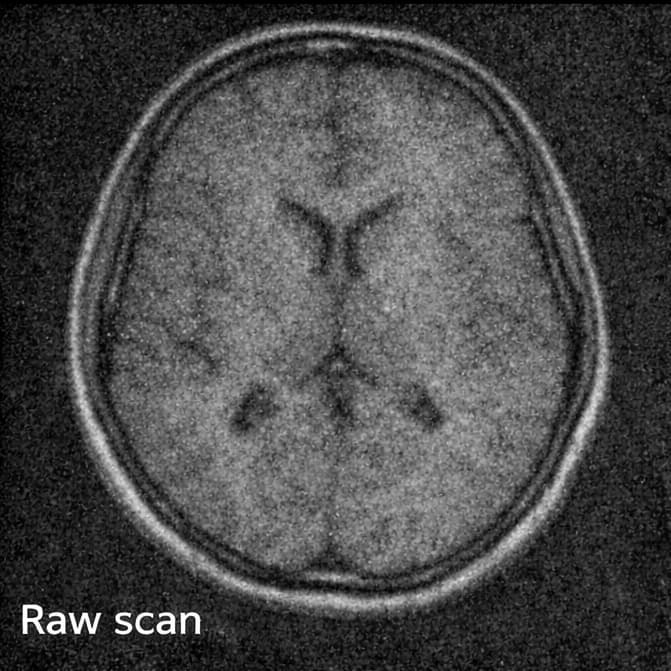
Ingestion Performance
Fast data upload and indexing
Efficient metadata handling

Optimized for speed, scalability, and efficiency, VolPixl delivers consistent performance across complex imaging workflows using advanced AI models and GPU-accelerated infrastructure.
Latency
Input to Output
Throughput
Dataset Volume
GPU
Inference Path
Scale
Workload Growth
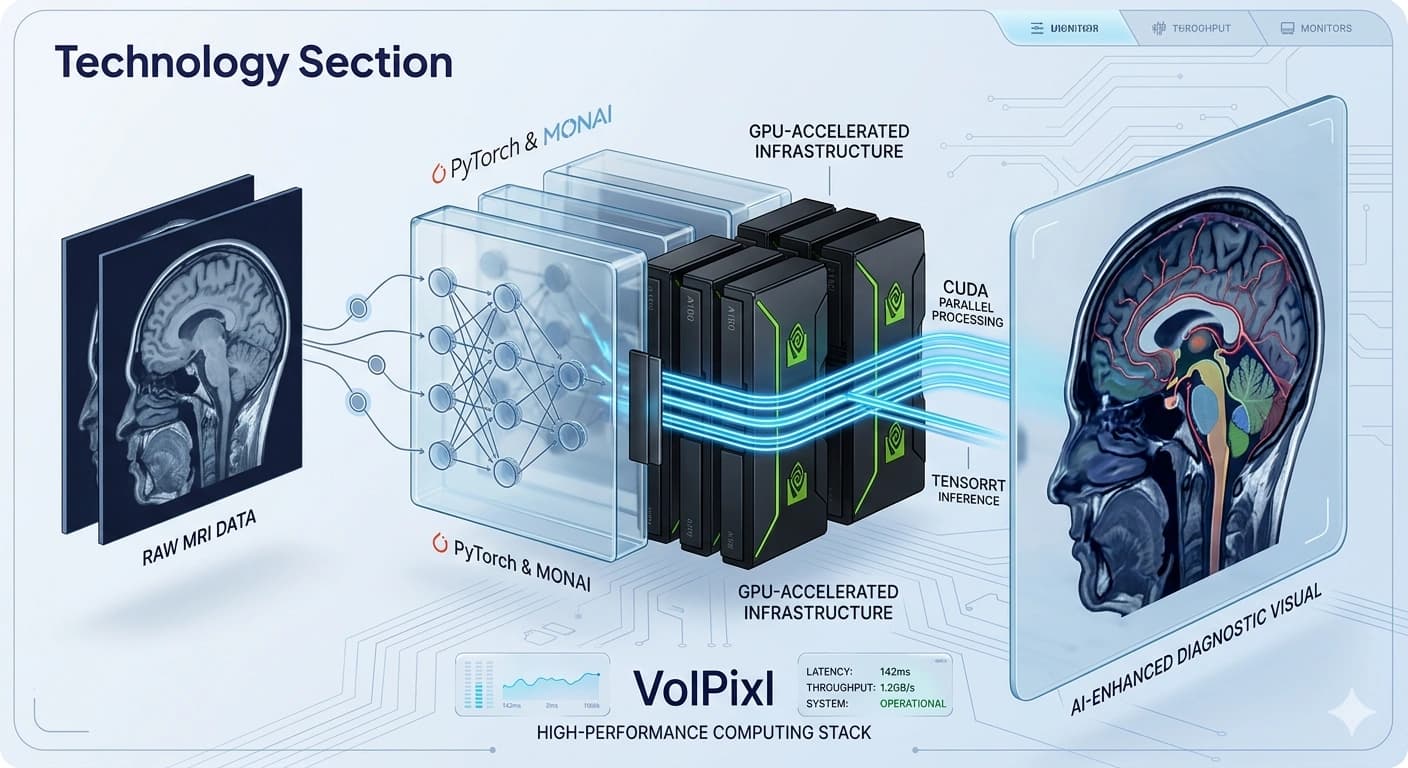
Speed, Scalability, and Quality Across Demanding Imaging Workflows
Medical imaging workflows require the ability to process large datasets quickly while maintaining high output quality.
VolPixl is engineered to handle these demands through optimized AI pipelines and high-performance compute infrastructure.
The platform focuses on delivering consistent performance across different workloads, ensuring efficient processing, reduced latency, and scalable execution for both small and large-scale environments.

Controlled Evaluation
Latency, throughput, and resource usage are evaluated across realistic imaging workload patterns.
Performance is evaluated across speed, latency, throughput, and scale so teams can understand how the pipeline behaves under real imaging workloads.
Measures how quickly imaging data is processed through the pipeline.
Optimized for fast AI inference
Reduced processing time per image
Efficient batch processing
Time taken from input to output generation.
Low-latency pipelines
Near real-time processing capability
Optimized data flow between stages
Volume of data processed within a given time.
High-throughput processing pipelines
Parallel execution of tasks
Efficient handling of large datasets
Ability to handle increasing workloads.
Horizontal scaling across compute resources
Multi-GPU support
Consistent performance under load
Measuring performance under peak clinical loads to ensure zero-bottleneck execution.
VolPixl evaluates performance using controlled testing environments and real-world workload simulations. We look beyond raw speed to measure architectural stability.
Batch processing of imaging datasets
Evaluation across varying resolutions
Testing under high-concurrency loads
Real-time latency & throughput tracking
Precision-tuned strategies to ensure your workflow remains lightning fast and scalable.
Parallel computation for faster processing
Efficient handling of large-scale workloads
TensorRT-based model optimization
Reduced inference time
Efficient execution of AI models
Simultaneous processing of multiple images
Improved throughput
Reduced overhead
Efficient memory allocation
Reduced resource wastage
Faster data access
Performance improvements are applied across all stages of the pipeline, from ingestion through output generation.
Fast data upload and indexing
Efficient metadata handling

Accelerated AI model execution
Parallel processing pipelines
Smooth rendering performance
Responsive interaction with imaging data

Fast export and integration
Minimal delay in result delivery
VolPixl is designed to maintain surgical precision even as workloads increase. Our architecture avoids the "performance ceiling" common in legacy systems.
10ms
Peak Latency
∞
Data Ceiling
Performance scales predictably as compute resources are added, ensuring no diminishing returns.
Maintains sub-millisecond response times even under 10x standard clinical volume.
Dynamic traffic distribution prevents hot-spotting and ensures hardware longevity.
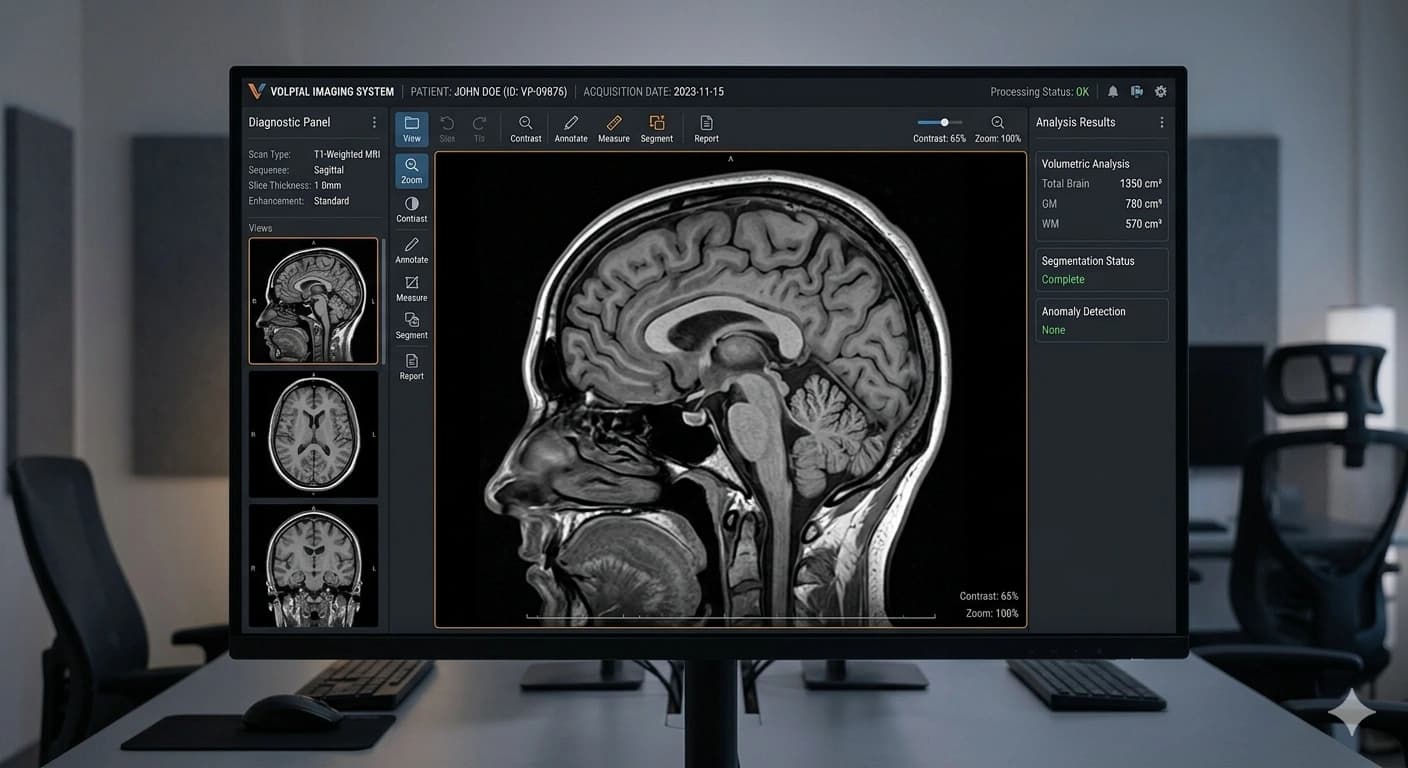
Efficient processing of large imaging datasets with minimal delays.
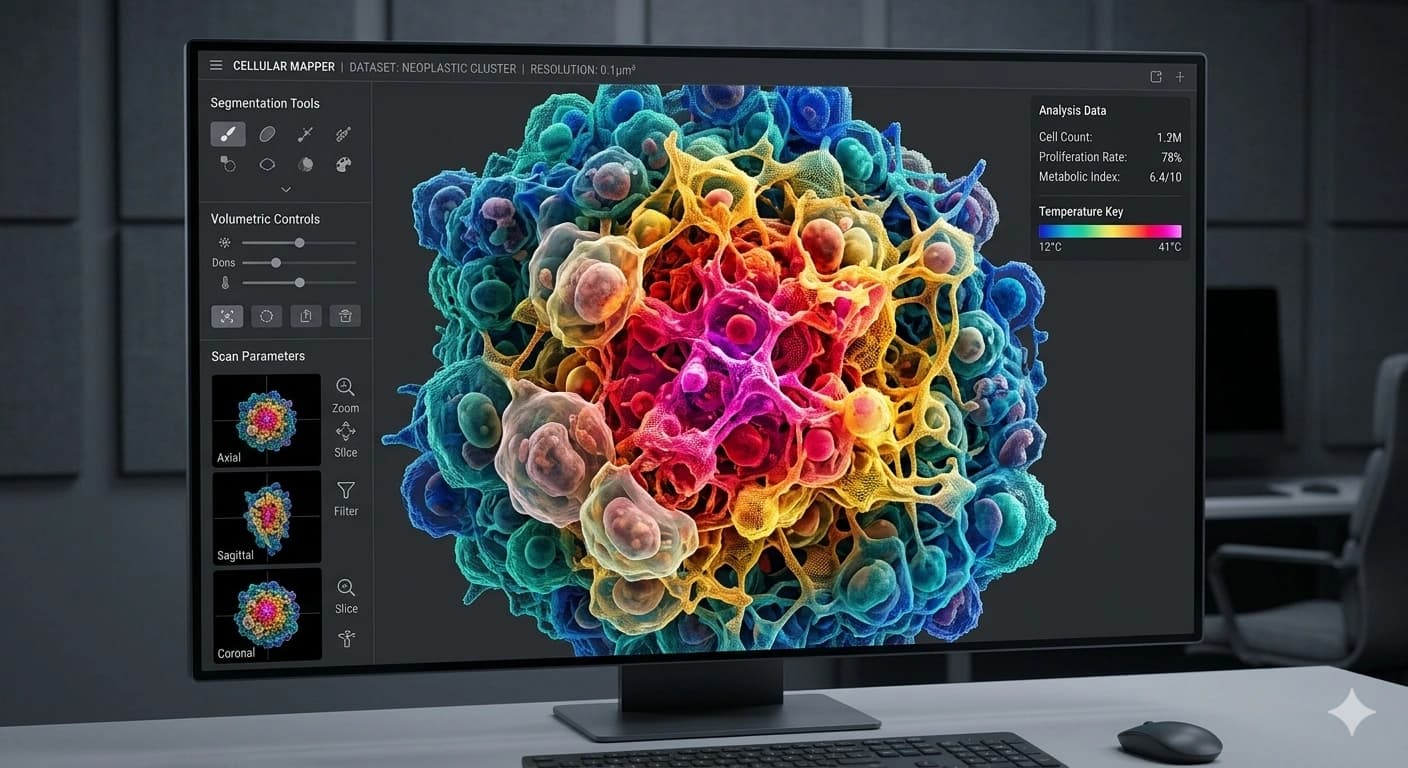
Handling complex datasets with consistent performance.
Low-latency APIs for real-time or near real-time processing.
VolPixl ensures reliable performance across different environments.
Stable processing times
Consistent output quality
Reliable system behavior
Performance optimization is an ongoing process.
Continuous model optimization
Infrastructure improvements
Monitoring and tuning of pipelines
Performance may vary depending on data size, system configuration, and workload characteristics. Benchmarks are indicative and based on controlled testing environments.
Use benchmark results as directional guidance and validate performance against your own modalities, deployment footprint, and workload profile.
Leverage optimized AI pipelines and GPU-accelerated infrastructure for fast, scalable medical imaging workflows.