
Scalable AI Architecture for Medical Imaging
A modular, high-performance AI architecture designed to process, enhance, and visualize complex medical imaging data with speed, efficiency, and reliability.
Layered
System Design
Unified
Data Flow
GPU
Execution Path
Low Latency
Output Delivery
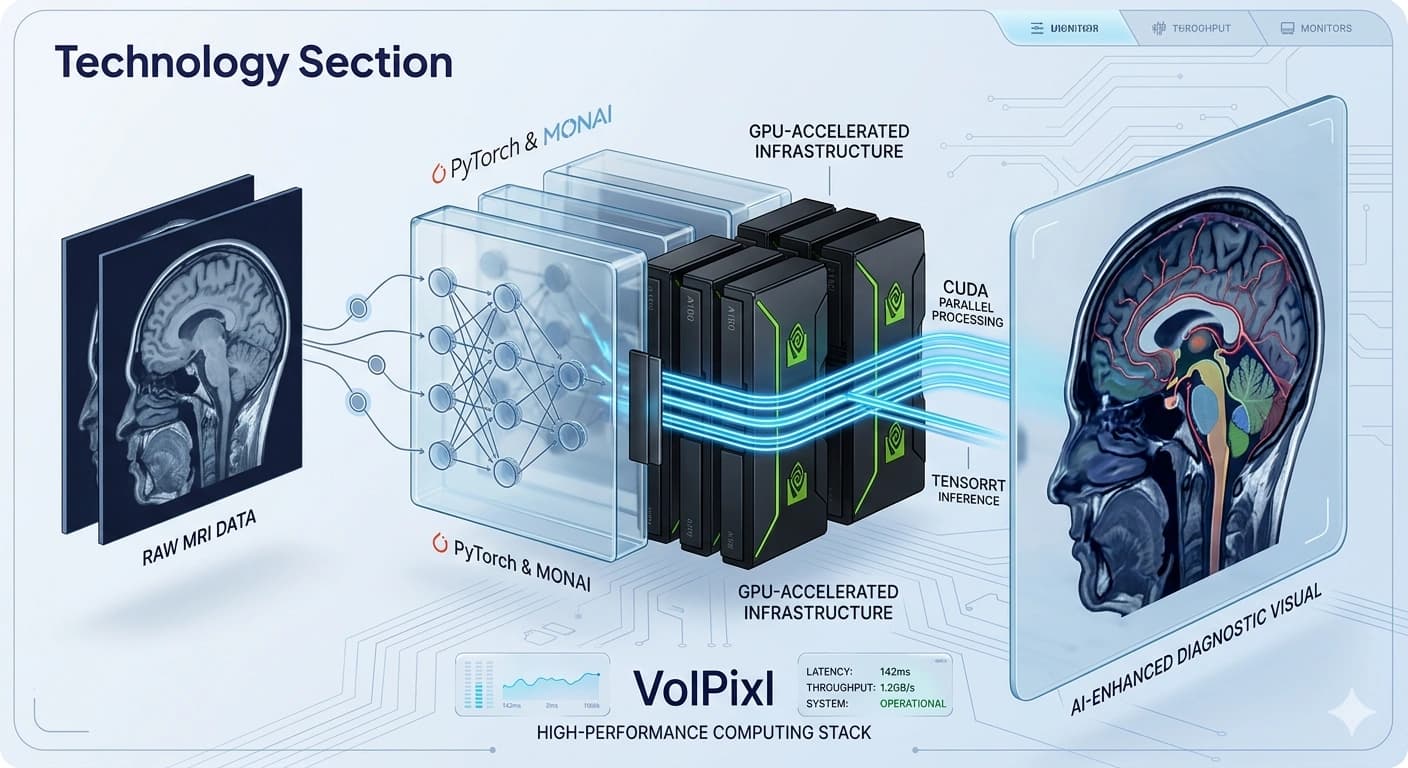
Layered AI Coordination Across Data, Models, Inference, and Visualization
Modern medical imaging workflows require more than standalone AI models. They demand a cohesive architecture that integrates data processing, model execution, and visualization seamlessly.
VolPixl's AI architecture is built as a layered, modular system that orchestrates multiple AI components within a unified pipeline.
It ensures efficient data flow, optimized model performance, and scalable execution across different workloads while maintaining low latency and consistent output quality.
System Diagram
Modular layers coordinate data preparation, model execution, inference, and delivery.
Core Design Principles
The architecture is designed to remain flexible, fast, and interoperable as imaging workflows evolve across datasets, teams, and deployment environments.
Modularity
Each component of the AI system operates independently, enabling flexibility and easy updates.
Scalability
The architecture supports scaling across datasets, users, and compute resources.
Efficiency
Optimized pipelines ensure minimal latency and efficient resource utilization.
Interoperability
Designed to integrate with external systems and existing workflows.
Layered AI System Design
A visual architecture map shows how imaging data moves through the platform, from secure ingestion and preprocessing to model execution, visualization, and external delivery.
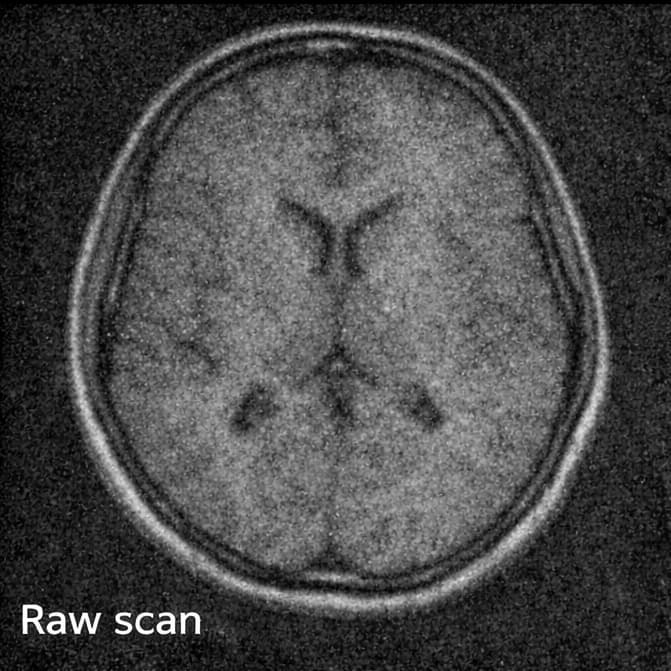
Ingest, index, and protect imaging data.
Data Layer
System Component
Handles ingestion, storage, and preparation of imaging data.
Capabilities
DICOM and standard format support
Metadata extraction
Data normalization
Secure storage and retrieval

Clean and standardize inputs before model execution.
Preprocessing Layer
System Component
Prepares data for AI model execution.
Processes
Noise filtering
Resolution normalization
Data standardization
Input validation

Run task-specific AI models and deep learning pipelines.
Model Layer
System Component
Core AI processing layer where models are executed.
Components
Image enhancement models
Segmentation models
Feature extraction models
Reconstruction models
Characteristics
Optimized deep learning architectures
Task-specific model pipelines
Efficient batch processing
Optimize production execution for speed and throughput.
Inference Layer
System Component
Executes AI models efficiently in production environments.
Features
Tensor optimization engines
Low-latency inference pipelines
GPU-accelerated execution
Batch and real-time processing

Coordinate jobs, queues, resources, and recovery logic.
Orchestration Layer
System Component
Manages workflow execution and resource allocation.
Capabilities
Task scheduling
Workflow automation
Load balancing
Error handling and retries
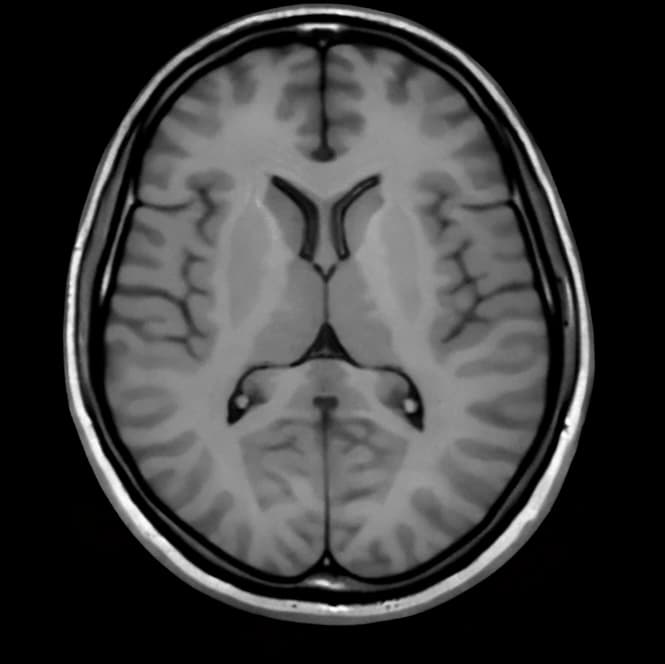
Render processed outputs for review and interaction.
Visualization Layer
System Component
Transforms processed data into visual outputs.
Features
2D and 3D rendering
Interactive visualization
Multi-view support
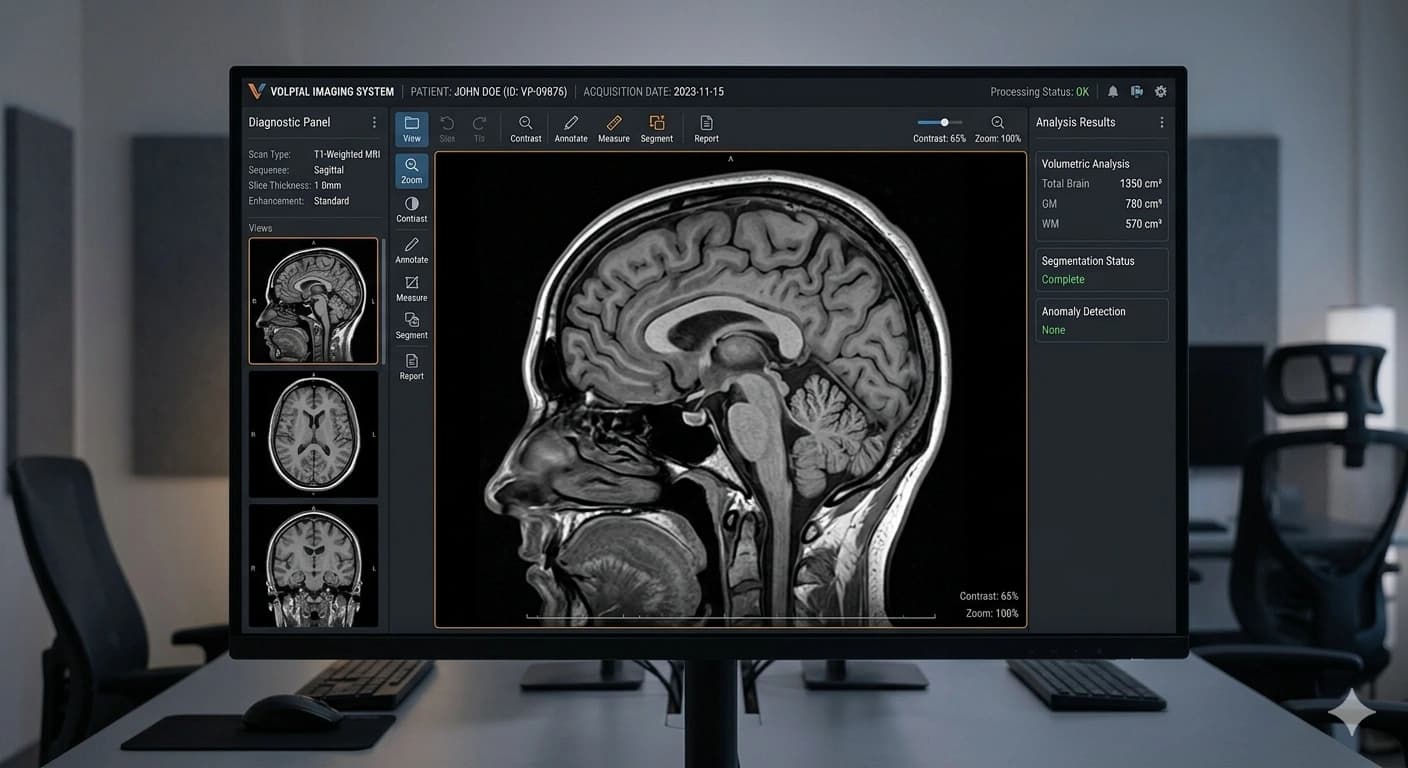
Deliver outputs to clinical systems and external products.
Integration Layer
System Component
Connects the AI system with external applications.
Capabilities
API-based access
Integration with PACS and imaging systems
Data export and delivery
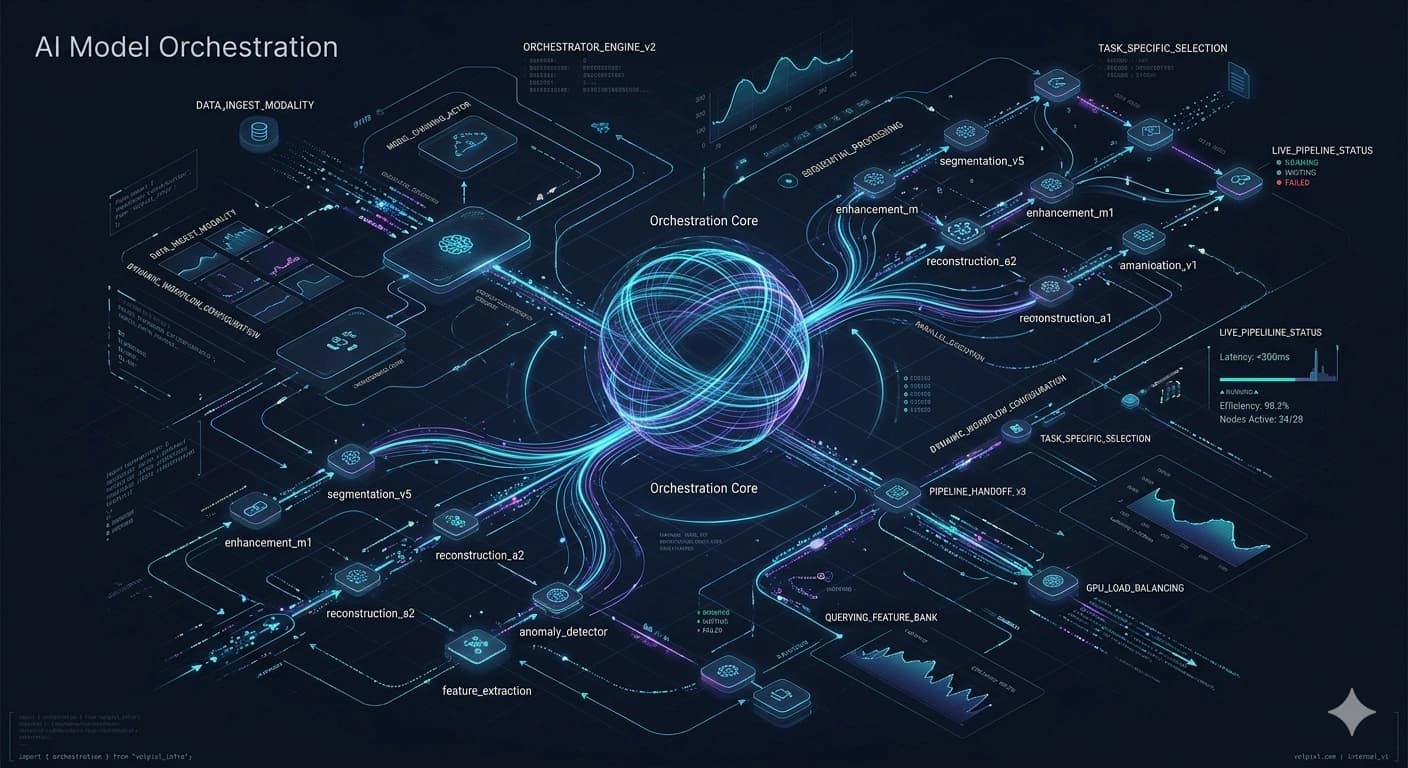
Dynamic Routing
Multi-Model Pipeline Synchronization
Coordinated Execution of AI Models.
VolPixl orchestrates multiple specialized AI models within a unified workflow. By chaining neural layers, we ensure that every pixel is processed by the optimal specialized architecture for its modality.
Sequential & Parallel Execution
Pipeline-based Model Chaining
Task-specific Model Selection
Dynamic Workflow Configuration
End-to-End Processing Flow.
Our architecture ensures a continuous, high-bandwidth stream of data through optimized GPU-accelerated stages.
Input Data
DICOM / Volumes
Preprocessing
Denoise & Align
AI Models
Neural Processing
Inference
GPU Execution
Visualization
3D Rendering
Output
API / PACS Export
Continuous Flow
Automated stream synchronization
Minimal Latency
Near-zero overhead between stages
Optimized Transfer
DMA-assisted data movement
Performance Optimization
CUDA-based parallel computation
TensorRT-optimized inference
Memory optimization strategies
Batch processing pipelines
Scalability and Deployment
Deployment Options
Cloud-based deployment
Hybrid environments
Scalable compute clusters
Capabilities
Horizontal scaling
Multi-GPU support
Load balancing
Stable and Predictable
Outputs.
Our architecture is precision-engineered to ensure consistent performance across diverse datasets and heavy clinical workloads. We eliminate volatility so you can focus on the results.
Consistent Output Quality
Deterministic processing ensures the same input yields identical, high-fidelity results every time, regardless of load.
Robust Error Handling
Built-in redundancy and graceful degradation keep workflows moving even during edge-case data anomalies.
Stable Model Execution
Isolated execution environments prevent resource contention and ensure predictable latency for AI inference.

Secure AI Processing
Environment.

Encrypted Data Handling
End-to-end AES-256 encryption applied at the ingestion layer and maintained throughout the processing lifecycle.
Secure Access Control
Identity-based infrastructure ensuring only verified clinical personnel can interact with specific data clusters.
Privacy-First Design
Advanced de-identification protocols that scrub PHI before data enters the neural processing pipeline.
Clinical Integrity
Architected specifically for medical environments with full traceability and HIPAA-compliant data auditing.
Why VolPixl AI Architecture
The architecture is built to unify AI workflow execution while keeping performance, flexibility, and system integration strong across modern imaging environments.
End-to-end AI workflow integration
High-performance processing
Scalable and flexible design
Efficient resource utilization
Seamless system integration
Build on a Robust AI Architecture
Leverage a scalable and efficient AI architecture designed for modern medical imaging workflows.